Essay
What a Nakshatra Adds to a Chart
Each lunar mansion spans 13°20′. That finer grain changes planetary flavour, dasha seed, and matching work — without replacing sign, house, or lordship.
nakshatra · moon · foundations
18 Sept 2026 · 5 min read
A sign is thirty degrees. A nakshatra is thirteen degrees and twenty minutes. Twenty-seven of them complete the ecliptic. That arithmetic is the first thing a nakshatra adds: a smaller unit than the rashi, large enough to matter, small enough to distinguish two planets that share a sign.
Jyotish uses that unit in several places at once. The Moon’s nakshatra at birth is the seed of Vimshottari dasha. Matching systems such as kuta scoring weigh janma nakshatra. Planetary results are often taught with a nakshatra flavour layered onto the sign. None of those jobs is the same as printing a personality caption for Ashwini or Mula and stopping there.
A short note already lives in the archive: Nakshatras, briefly. This page is the method underneath that note. What does the mansion actually contribute once sign, house, and lordship are already on the table?
A division of the ecliptic, not a second zodiac
The twenty-seven nakshatras are equal spans along the same sidereal belt as the twelve rashis. They do not form a rival zodiac with a separate lagna. They cut across signs: some mansions sit inside one rashi, others straddle two. Bharani is wholly in Aries; Krittika begins in Aries and continues into Taurus. That overlap is why a planet can change nakshatra without changing sign, and why a sign-lord reading can miss a change that a nakshatra-lord reading would catch.
Because the belt is sidereal, ayanamsa choice can move a planet near a nakshatra edge. If the degree is close to a boundary, name the uncertainty. The mansion is only as firm as the longitude.
Planets other than the Moon
Every graha occupies a nakshatra. The Moon’s mansion is privileged because of dasha and matching, but a Mars in Magha is not the same Mars as a Mars in Purva Phalguni. Both sit in Leo. The mansion lords are Ketu and Venus. Traditional results verses often add a nakshatra note on top of sign results. That note is still a note. It does not license skipping house lordship. It does mean that two charts with “Mars in Leo” are not interchangeable once the mansion lord and the older imagery have changed.
Rahu and Ketu as nakshatra lords matter for dasha even though they own no signs. Ardra, Swati and Shatabhisha are Rahu-ruled; Ashwini, Magha and Mula are Ketu-ruled. A planet sitting in those slices has a nodal mansion-lord. Sign ownership will not tell you that. Nakshatra Lord and Sign Lord is the full comparison.
Some lists mention a twenty-eighth mansion, Abhijit, used in certain electional calculations and overlapping the end of Uttara Ashadha. CapSage will not treat Abhijit as a twenty-eighth natal personality. Where a muhurta tradition uses it, that is a specialised calendar tool. The natal default remains twenty-seven equal spans.
What it adds to a planet already in a sign
Sign describes a planet’s elemental and lordship environment — Mars in Cancer is in its debilitation rashi, regardless of nakshatra. The mansion adds a second host: the nakshatra lord, a deity and symbol in the older lists, and a pada that points into a navamsa. Two people with Moon in Taurus can have Rohini or Mrigashira. Same sign lord (Venus). Different nakshatra lords (Moon or Mars). Different dasha start-points. Different traditional images. The sign has not been cancelled. It has been specified.
That specification is most useful when it agrees with something else already in the chart — a repeating lord, a house theme, a dasha that will actually run. It is least useful when it is asked to outvote dignity, house, and life.
The dasha seed
Vimshottari begins from the natal Moon’s nakshatra. The remaining portion of that mansion at birth determines how much of the opening mahadasha is left. This is a mechanical contribution, not a poetic one. Without the Moon’s nakshatra, the 120-year sequence has no start. Vimshottari Dasha: How the Sequence Is Built is the timing companion. Janma Nakshatra and the Moon is the lunar one.
Matching, electional work, and the rest
Some compatibility methods score the two natal Moons by nakshatra. Electional work (muhurta) often prefers certain mansions for certain acts. Those are specialised uses. They do not convert a nakshatra into a character portrait, and they do not make a marriage chart a substitute for the people involved.
What a nakshatra cannot replace
It cannot replace the lagna when the question is house structure. It cannot replace functional lordship for a given rising sign. It cannot replace dasha and transit as timing. It cannot tell you, from a keyword list, what a person does for a living or whether they are kind. The mansion is a refinement. The chart is still the document.
If you only remember one distinction: the nakshatra is a 13°20′ slice with its own lord and its own jobs. Read those jobs. Leave the sticker on the tin.
Continue
Continue this idea
Essay
Nakshatras, briefly
Twenty-seven lunar mansions. A finer grain than the signs, and no excuse for fate.
nakshatra · moon
1 min read
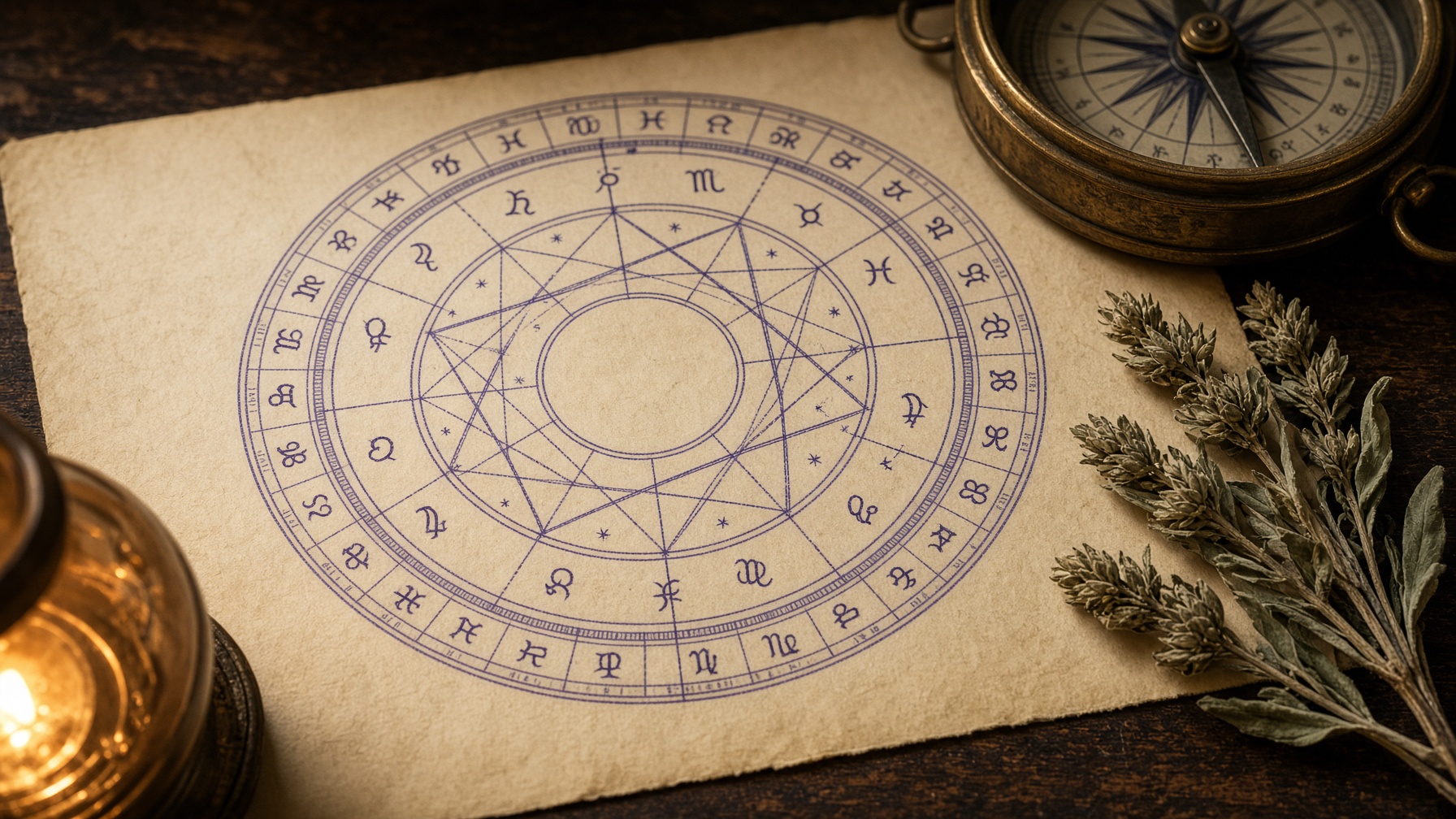
Essay
Nakshatra Lord and Sign Lord
Venus may own the sign while Mars owns the mansion. Two hosts, two jobs — and a common source of mixed signals in interpretation.
nakshatra · lordship · foundations
4 min read
Situation
Related situation
Situation
Why Do I Keep Attracting the Same Kind of Relationship?
A new face. The old argument. The seventh house as weather you walk into wearing last year's coat.
relationships · seventh house · venus
2 min read
Response
Related solution
Solution
How to Use Astrology during Relationship Uncertainty
Reflection and timing. Not mind-reading, not a soulmate stamp, not a reason to stay unsafe.
relationships · synastry · seventh house
1 min read
Also
From the Method
18 Sept 2026 · 5 min · CapSage Astro