Essay
Gandanta: The Three Water–Fire Junctions
Revati–Ashwini, Ashlesha–Magha, Jyeshtha–Mula. Classical lists treat those knots as sensitive. The name records a junction; it travels badly as a curse.
nakshatra · gandanta · foundations
18 Sept 2026 · 5 min read
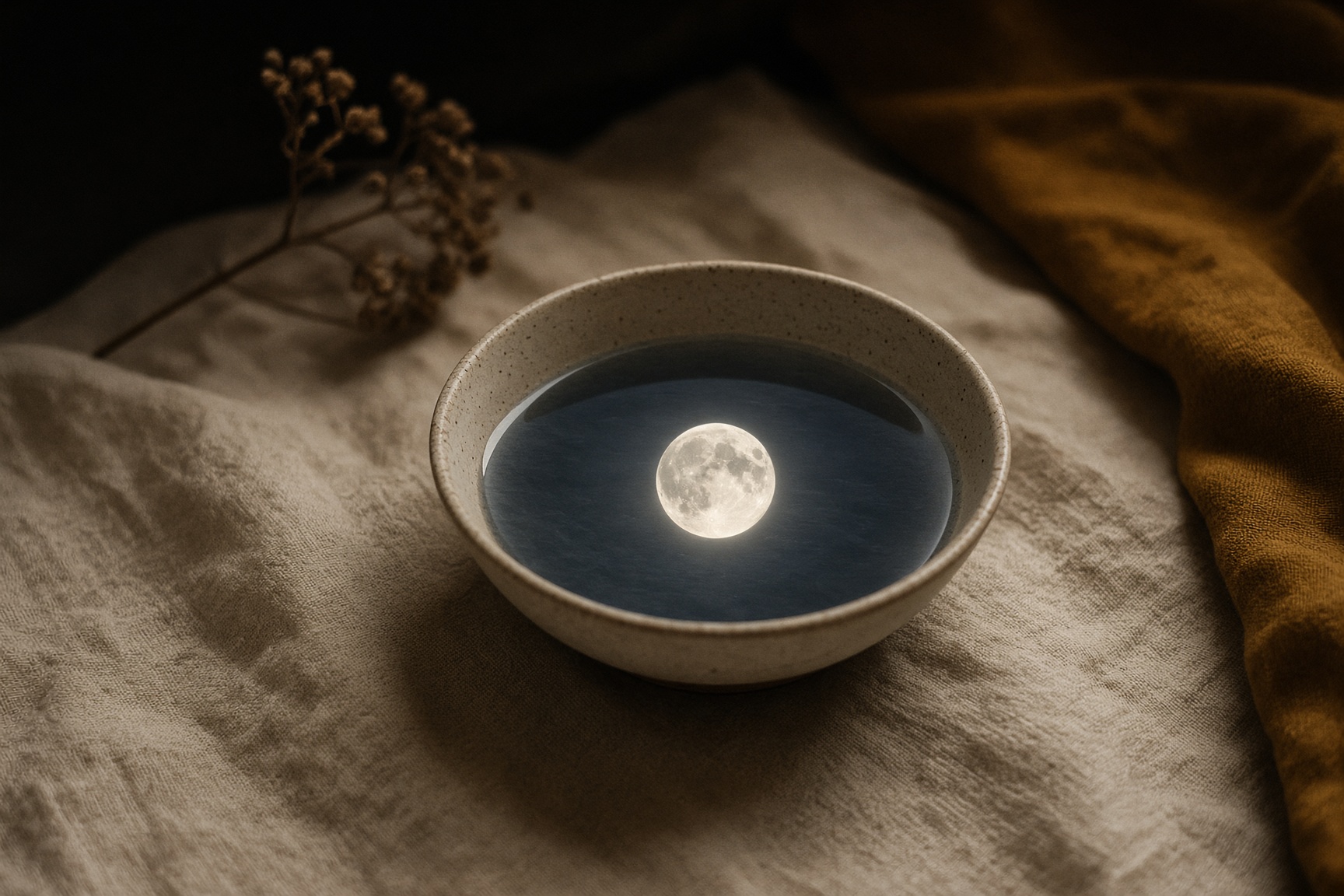
Three places on the sidereal belt a water sign ends and a fire sign begins: Pisces into Aries, Cancer into Leo, Scorpio into Sagittarius. The nakshatras that occupy those endings and beginnings are Revati and Ashwini, Ashlesha and Magha, Jyeshtha and Mula.
Gandanta is the name later teaching gave to those knots. A short note already lives in the archive — Gandanta: the joint in the wheel. This page is the working geometry: which padas, which grahas, which claims the tradition actually supports, and which claims it does not.
Why these three junctions
The twelve rashis cycle as fire, earth, air, water. Most sign changes keep a compatible elemental step, or at least a step that classical lists did not single out. Water into fire is the remaining harsh join: a dissolving sign giving way to a burning one, with no earth or air in between. The three such joins coincide with the end of a Mercury-ruled mansion (Revati, Ashlesha, Jyeshtha) and the start of a Ketu-ruled mansion (Ashwini, Magha, Mula). That coincidence is why gandanta is a nakshatra topic as well as a sign-boundary topic.
Common teaching locates the sensitive span in the last pada of the water mansion and the first pada of the fire mansion — the closing 3°20′ of Pisces, Cancer, Scorpio and the opening 3°20′ of Aries, Leo, Sagittarius. Some lists widen the orb; some narrow it to a smaller knot at the exact 0° line. CapSage will keep the pada-sized span as the default, and will say so when a finer or wider convention is being used.
Moon, lagna, and the other grahas
Traditional remarks are loudest when the Moon or the lagna occupies the knot. The Moon because janma nakshatra, matching, and the opening dasha all hang on Chandra’s mansion. The lagna because the first house and every house counted from it change at the same instant the rising crosses 0°. A lagna gandanta is, among other things, a sign-boundary problem with a nakshatra name attached. When the Ascendant Sits on a Sign Boundary is the hour-sensitive half of that problem.
Other grahas can sit in gandanta too. A Saturn in the last pada of Jyeshtha is still Saturn, still in Scorpio, still in a Ketu-ruled mansion about to give way to Mula. Traditional notes may treat that as a strained or transitional dignity of expression. They do not license a medical or moral story from the name alone. Slow planets occupy a 3°20′ box for months or years; the Moon occupies it for hours. Duration should travel with the claim.
What older lists actually associate
Electional teaching often avoids gandanta spans for beginnings: a journey, a rite, a first feeding. Natal teaching sometimes associates the knot with difficulty around birth, with a life that has to make a sharp transition, or with a theme of incompletion that later finds a form. Those are traditional associations. They are also easy to inflate. A person born with the Moon in the last pada of Revati has a Moon at the end of Pisces in a Mercury mansion, with Ketu waiting across the line. That is a full sentence. “Cursed at the joint” is not a fuller one.
Some popular pages attach gandanta to infant mortality, spiritual emergency, or guaranteed rupture. CapSage will not repeat those as facts. If a classical handbook mentions hardship at the threshold, the honest modern use is: look for extra care in the birth record, extra caution in the hour, and extra attention to the rest of the chart. Then stop.
Dasha at the knot
If the janma nakshatra is Revati, the opening mahadasha is Mercury’s, and if the Moon is in the last pada, little of that Mercury term remains. The native may enter Ketu’s mahadasha — Ashwini’s lord — relatively soon. A similar remainder logic applies at Ashlesha (Mercury into Ketu/Magha) and Jyeshtha (Mercury into Ketu/Mula). That is a timing fact, available from the Moon’s degree. It does not require the word gandanta to be true, and the word does not make the remainder more dramatic than the arithmetic. Pada: The Four Quarters of a Nakshatra and Janma Nakshatra and the Moon are the measuring companions.
How CapSage will use the term
We will name gandanta when the Moon, lagna, or a slow graha actually occupies the last or first pada at those three joins. We will treat it as a sensitivity of placement and of hour. We will not treat it as a hereditary stain, a medical diagnosis, or a spiritual rank. If the degree sits on the edge of the pada, we will say the edge is in play. If the birth time cannot support a lagna in that pada, we will not invent one in order to have a knot to discuss.
The three junctions are real features of the sidereal belt. The useful work is to read what sits there. The unhelpful work is to frighten a reader with a Sanskrit word and no second look.
Continue
Continue this idea
Essay
When a Nakshatra Spans Two Signs
Nine lunar mansions begin in one rashi and finish in the next. Sign lord and mansion lord then part company — a common source of mixed readings.
nakshatra · rashi · foundations
5 min read
Essay
Pada: The Four Quarters of a Nakshatra
Each mansion splits into four spans of 3°20′. Those quarters are why navamsa, dasha remainder, and two people with the same nakshatra can still differ.
nakshatra · pada · navamsa
3 min read
Situation
Related situation
Situation
Why Do I Keep Attracting the Same Kind of Relationship?
A new face. The old argument. The seventh house as weather you walk into wearing last year's coat.
relationships · seventh house · venus
2 min read
Response
Related solution
Solution
How to Use Astrology during Relationship Uncertainty
Reflection and timing. Not mind-reading, not a soulmate stamp, not a reason to stay unsafe.
relationships · synastry · seventh house
1 min read
Also
From the Method
18 Sept 2026 · 5 min · CapSage Astro