Essay
What a Dasha Planet Owns, and Where It Sits
A period-planet always makes two claims at once: the bhavas it rules, and the bhava it occupies. Practical dasha work is the art of holding both without letting one erase the other.
dasha · lordship · occupation · houses
19 Sept 2026 · 6 min read
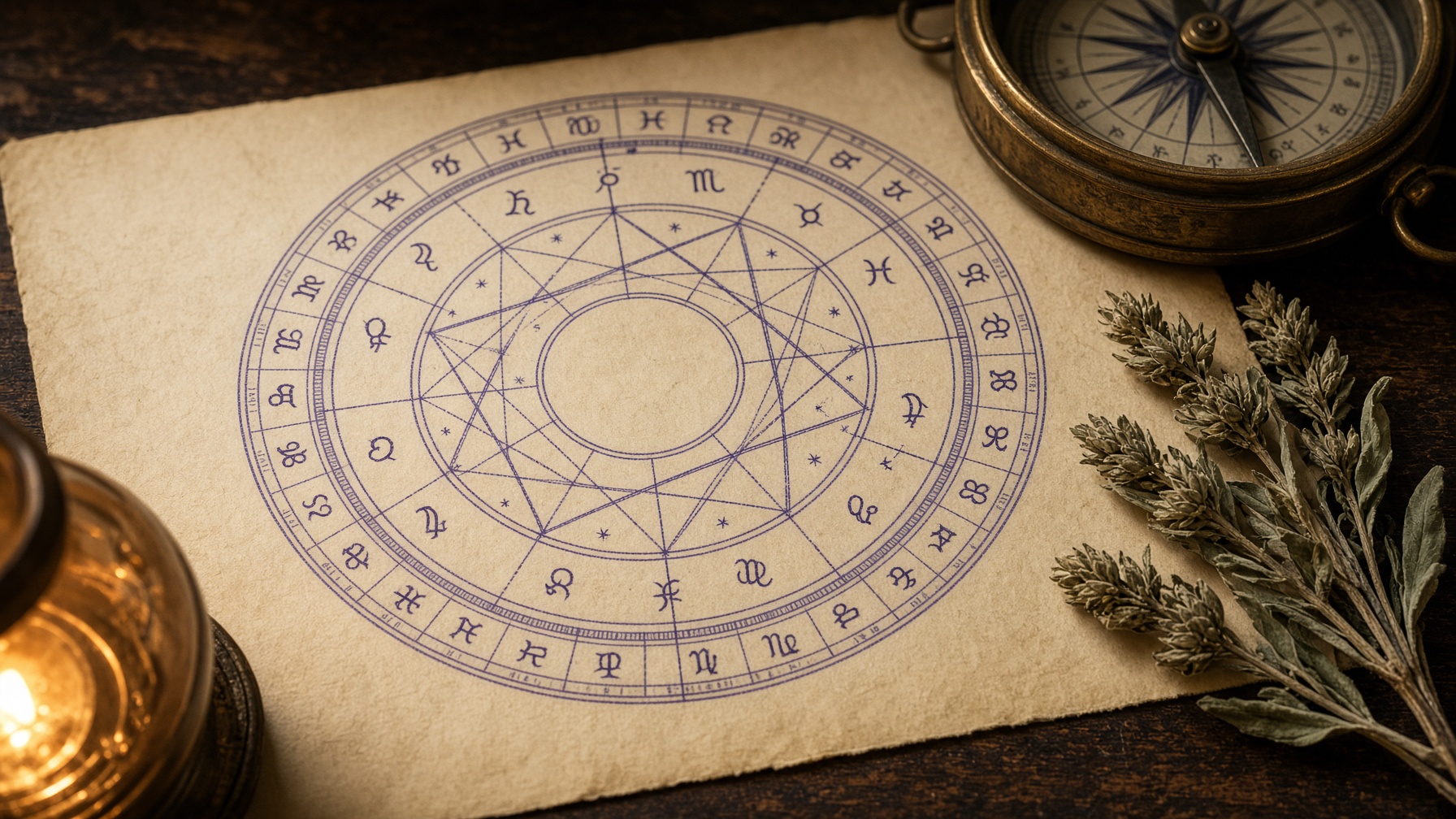
Name a mahadasha and two facts arrive together. The planet owns one or two signs, and therefore one or two houses from the lagna. The same planet sits in a house, in a sign, with whatever company and aspects the natal figure already recorded. Period results are often argued from only one of those facts. That is how “Saturn dasha” becomes a single mood instead of a document.
How House Lordship Changes a Dasha established the first fact: functional role makes the same named period different in two charts. This page is the practical joint reading — ownership and occupation spoken in one sitting, which is how Phaladīpikā-style dasha notes tend to proceed when they are being careful, and how they collapse when a later reader keeps only the slogan.
Ownership says which areas of life are on the clock
During a Venus mahadasha for a Capricorn lagna, Venus rules the fifth and the tenth. Those houses are “on the clock” for twenty years in a way they are not during, say, a Mars period for the same native. Traditional dasha phala often begins there: the period of a planet brings forward the houses it owns. Career, children, creative work, authority — the fifth-and-tenth pair — deserve first mention before anyone reaches for Venus as romance in the abstract.
For Taurus lagna, Saturn as yoga-karaka rules the ninth and tenth. A Saturn mahadasha then has dharma and action as its owned brief. For Cancer lagna, Saturn rules the seventh and eighth. Same planet, same nineteen years of Vimshottari, different owned brief. Functional Lords: How the Lagna Rewrites a Planet’s Job is the natal version of this. Dasha is when that job gets a calendar.
Occupation says where the work is staged
The owned houses are the portfolio. The occupied house is the desk. A tenth-lord in the sixth does tenth-house work through sixth-house conditions: service, debt, conflict, illness, employment grind, depending on the rest of the figure. A tenth-lord in the tenth does that work from its own seat. A tenth-lord in the twelfth does it through absence, foreign context, expenditure, or a retreat that still has a public consequence.
Occupation also names the sign, the dignity, the conjunctions, and the aspects on that seat. A well-dignified owner sitting in a dusthana is a different working arrangement from a poorly dignified owner sitting in a kendra. How to Read a Planet in Context is the full natal sequence. In dasha work you run that sequence on the period-planet, then keep both outputs: portfolio and desk.
When the two claims agree
Agreement is the easy page. Ninth-lord in the ninth, running its own mahadasha: owned brief and occupied seat point at the same area. The period may still be mixed — dignity, aspects, and the antardasha lord will see to that — but you are not being asked to reconcile two different houses. Write the one area with more confidence, then modify. Mahadasha and Antardasha Together remains the seasonal overlay: the guest-planet of the bhukti can pull a second house-pair into the same years.
When they pull apart
This is the usual document. Fifth-and-tenth lord sitting in the twelfth. Seventh-lord sitting in the second. Lagna-lord sitting in the eighth. Two true sentences. The period will tend to move the owned areas through the conditions of the occupied house. That “through” is the interpretive hinge. It is more precise than choosing a winner.
A worked shape: Taurus lagna, Saturn ruling ninth and tenth, Saturn occupying the sixth with Mars. In a Saturn mahadasha you would be sloppy to speak only of status and dharma, and equally sloppy to speak only of conflict and illness. The more disciplined sentence is that ninth-and-tenth matters are being processed through sixth-house labour: work that looks like service or dispute, a vocation that has to handle debt or employees, a dharma that arrives as a problem to be solved rather than as a title. Whether that is constructive or draining depends on dignity, aspects, and what the antardashas bring. The hinge stays.
The antardasha as a second desk
The mahadasha planet keeps both of its claims for the whole major period. The antardasha planet adds a second owned pair and a second occupied seat. Four facts, then, in a joint period — unmanageable if you try to narrate all of them as events, useful if you treat two as the long brief and two as the season.
When the sub-lord occupies a house the mahadasha lord owns, the season often feels like a visit to the major planet’s portfolio. When the sub-lord occupies a house unrelated to that portfolio, the season can feel oddly beside the point of the major theme — a side-chapter, or a quiet maintenance of another area, while the long brief continues. Mahadasha and Antardasha Together is the relationship note. This page only adds: check occupation of the guest against ownership of the host before you decide the season is a new biography.
Nodes, who own no signs
Rahu and Ketu do not rule rashis in the usual seven-graha ownership scheme. In their periods, occupation does more of the talking, along with the lord of the sign they occupy, the houses they aspect in the school you are using, and the nakshatra they sit in. You cannot fill in “owned houses X and Y” for a node the way you can for Saturn. Do not invent a rulership to make the template tidy. Occupation, sign-dispositor, and the natal nodes’ other links are the honest brief. Rahu Mahadasha: What It Actually Means keeps the node in that grammar.
A working order for the period
Before narrating events, write four lines:
- This planet owns houses __ and __ from the lagna (skip this line for the nodes).
- It sits in house __, in sign __, with __.
- Dignity and aspects, in brief.
- The current antardasha lord owns __ and sits in __; their natal relationship is __.
Then look at the life. If a documented event fits both the owned portfolio and the occupied conditions, the stack is doing work. If it fits only a keyword attached to the planet’s public reputation — Saturn as hardship, Venus as love, Jupiter as luck — you are probably reading a reputation. House-level lines still require a birth time that can hold the lagna. Sign-level comments may survive a weaker hour. The CapSage Method already separates those. So does this page.
Practical dasha interpretation is slower than a keyword and faster than a panic. Own, occupy, relate, then time. The Dashas hub at Topic hubs: Dashas holds the rest of the clock.
Continue
Continue this idea
Essay
How House Lordship Changes a Dasha
The same Saturn period is not the same event in two charts. Functional role — which houses the dasha planet owns — is often the missing sentence.
dasha · lordship · houses
2 min read
Essay
Mahadasha and Antardasha Together
The major period sets a long emphasis; the sub-period colours it. Reading either layer alone is how timing becomes a cartoon.
dasha · mahadasha · antardasha
3 min read
Also
From the Method
19 Sept 2026 · 6 min · CapSage Astro