Essay
Functional Lords: How the Lagna Rewrites a Planet’s Job
Mars as yogakaraka for Cancer, Saturn for Taurus, Venus for Capricorn. Natural benefic and malefic lists are the starting vocabulary. Ownership for this rising is the job description.
lagna · functional · lordship · yogakaraka
14 Sept 2026 · 5 min read
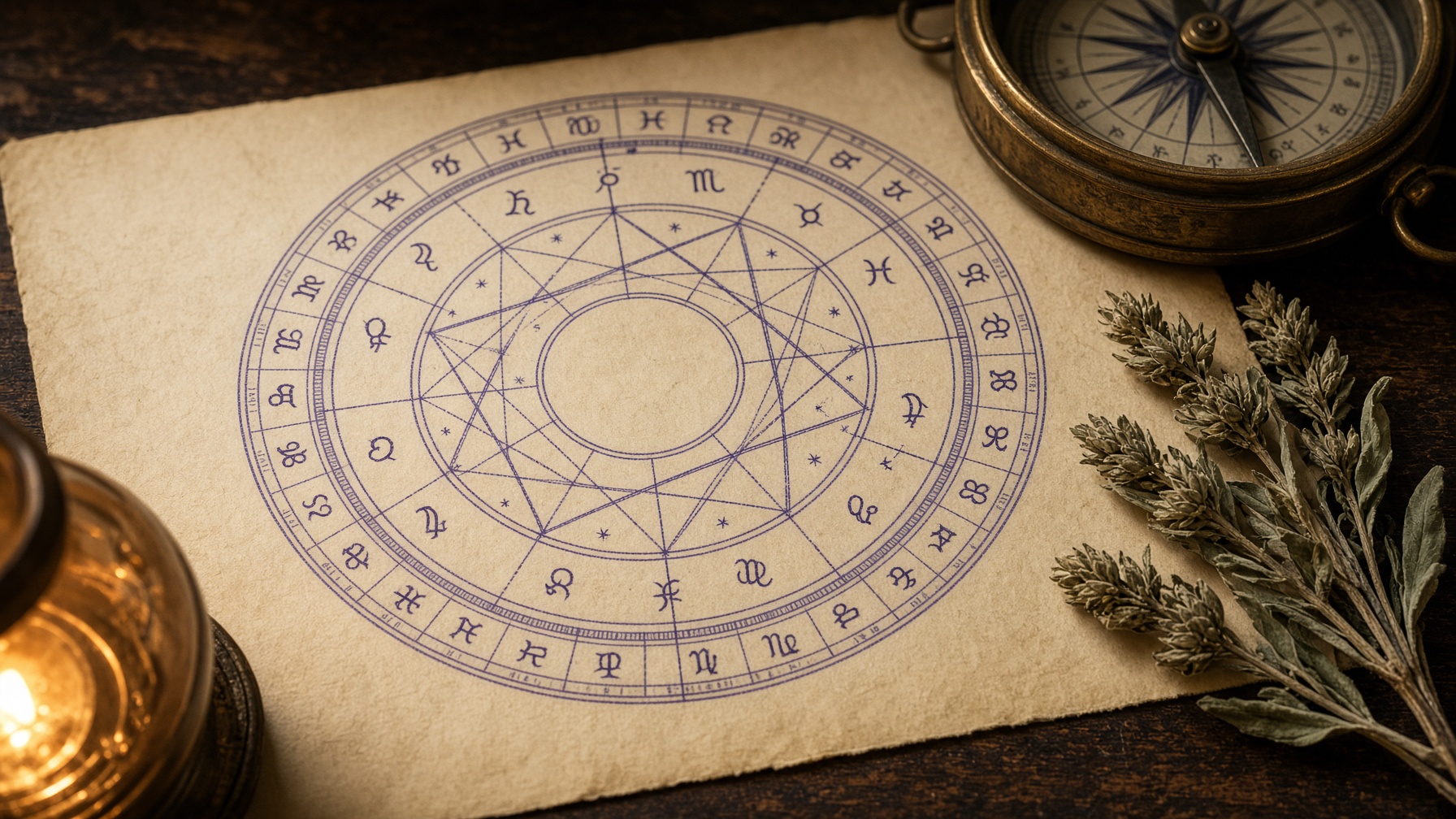
Mars owns the fifth and the tenth for a Cancer lagna. In the Parashara-style teaching most widely used for this topic, that double ownership — a trikona and a kendra — is the definition of yogakaraka, a planet whose job is to build. Mars remains a natural malefic. For Cancer rising, the job description has changed.
Benefics and Malefics in Vedic Astrology already separated natural status from functional status. The Lagna Lord as Structural Anchor treated the owner of the first. This page is the rest of the ownership table: how each rising sign assigns houses to the seven planets that own signs, and why two charts with “Saturn in the ninth” can be opposite essays.
Natural list, then the job
Natural benefics (Jupiter, Venus, unafflicted Mercury, waxing Moon) and natural malefics (Saturn, Mars, Sun in many lists, waning Moon, the nodes) describe a graha’s ordinary style of action. Functional status describes the houses that graha owns for this lagna. A planet can hold both: Venus is a natural benefic, and for a Taurus lagna Venus is also lagna lord. For a Scorpio lagna, Venus owns the seventh and the twelfth — partnership tied to loss or foreignness — a different assignment made of the same planet.
The nodes own no signs. They do not receive functional lordship in this table. They still occupy signs and run dashas. Their jobs come from occupation, aspect, and the signs they sit in, not from owning a house.
Yogakaraka: kendra plus trikona
When one planet owns a kendra (1, 4, 7, 10) and a trikona (1, 5, 9) for the same lagna, traditional teaching treats that planet as especially constructive for the chart. The usual list:
- Mars for Cancer (10th and 5th) and Leo (4th and 9th)
- Saturn for Taurus (9th and 10th) and Libra (4th and 5th)
- Venus for Capricorn (5th and 10th) and Aquarius (4th and 9th)
Those six lagnas are the ones for which a single planet holds both kinds of house. Other lagnas still have kendra lords and trikona lords; they simply are not the same planet. Raja Yoga as a Principle is what happens when those lords join. Yogakaraka is what happens when they are already one graha.
Yogakaraka does not mean the native is fortunate, martial, or saturnine as a personality. It means that when that planet is strong, well placed, and running in dasha, the houses of action and purpose are being staffed by the same officer. When that planet is weak or occupied in a dusthana, the officer is still the officer — under strain.
Dusthana lords as functional malefics
Planets that own the sixth, eighth, or twelfth for a given lagna are commonly treated as functional malefics, even if they are natural benefics. Jupiter owning the eighth and eleventh for Taurus lagna is a different Jupiter from Jupiter owning the ninth and sixth for Cancer lagna. The first mixes gains with hidden matters; the second mixes dharma with conflict. Both are Jupiter. Neither is “Jupiter is always kind.”
Kendradhipati dosha is a related, more specialised note: a natural benefic that owns only kendras (and not a trikona) may be treated as functionally less helpful than its natural status suggests. Schools argue about how heavily to apply it. CapSage will mention it when the ownership is exactly that pattern, and will not use it as a blanket to cancel every Jupiter in the tenth.
A few worked lagnas, not a personality set
Aries: Mars owns first and eighth — lagna lord tied to the eighth. Saturn owns tenth and eleventh. Venus owns second and seventh. The “malefic” Saturn is a work-and-gains planet here; the “benefic” Venus is resources and partnership. Cancer: Moon owns only the first; Mars is yogakaraka; Venus owns fourth and eleventh; Saturn owns seventh and eighth. Saturn as partner-and-eighth lord for Cancer is a heavier assignment than Saturn as ninth-and-tenth lord for Taurus. Same graha, opposite job titles.
You can complete the table for all twelve lagnas with a sign-ownership list and a house-count from the rising. The method is mechanical. The interpretation is not: placement, dignity, aspects, and dasha still decide how the job is done. How to Read a Planet in Context is the sequence. Functional lordship is one step in it, and it is the step that requires the lagna.
When the rising cannot be held
Without a usable birth time, this table should be closed. You may still discuss natural status, sign dignity, and planetary conjunctions. You may not appoint Saturn as yogakaraka for a guessed Libra lagna and then narrate a life from that appointment. Rising sign is the door introduced the first house. Functional lordship is what the first house does to every other planet’s employment. If the first house is unverified, the employment contracts are unverified too.
Write the ownership before the adjective. “Saturn is a natural malefic” can stay on the page. “Saturn is the ninth-and-tenth lord here, currently in dasha, occupying the third” is the sentence that can be used. The first sentence is vocabulary. The second is a reading.
Continue
Continue this idea
Essay
The Lagna Lord as Structural Anchor
The planet that owns the rising sign links the first house to the rest of the chart. Its sign, house, and condition are structural facts, not a personality caption.
lagna · ascendant · lordship
3 min read
Essay
Raja Yoga as a Principle
In the classical grammar, raja yoga is often a relationship between kendra and trikona lords. The principle is older and stricter than a catalogue of celebrity combinations.
yoga · raja yoga · kendra
4 min read
Also
From the Method
14 Sept 2026 · 5 min · CapSage Astro