Essay
How to Read a Planet in Context
Why one placement is never the whole chart
interpretation · method · foundations · grahas
12 Sept 2026 · 11 min read
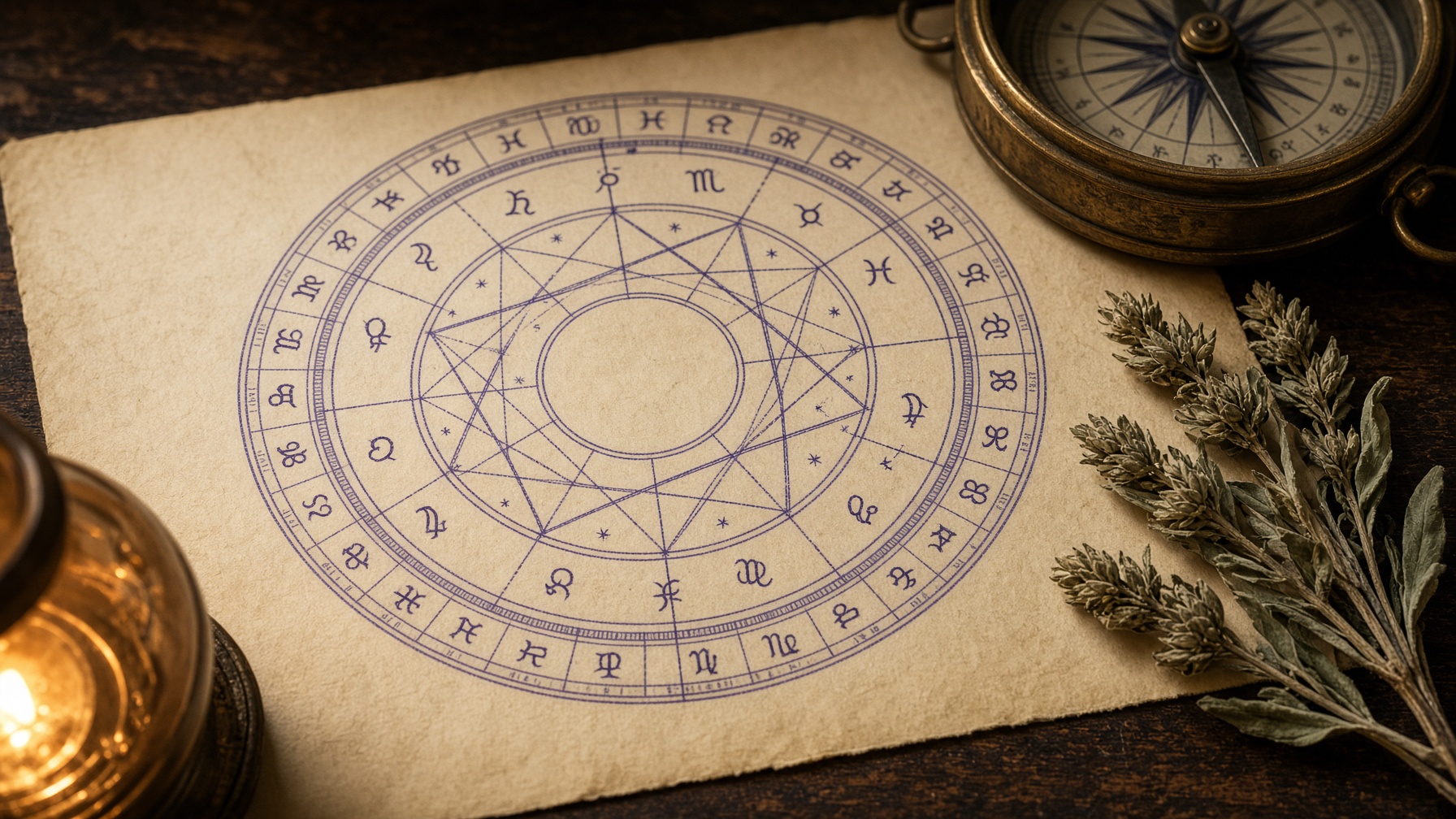
Single-placement astrology is tempting because it is fast. One glyph, one house, one sentence, and a life appears to have been named. Jupiter in the ninth means a teacher. Saturn in the tenth means delay. Rahu in the first means hunger. The captions travel. The charts do not.
A planet should be read through several layers of context before conclusions are drawn. Natural meaning, functional role, placement, strength, relationships, timing, repetition, and the life actually being lived are different layers. Skipping them is how a tendency becomes a prediction. The CapSage Method already says a chart is read as a whole. This page is the practical sequence for one graha inside that whole.
Start with the planet’s natural nature
Begin with what the graha tends to do, before asking what it is doing here. Jupiter enlarges. Saturn structures and limits. Mars cuts and heats. Venus connects. Mercury links. The Sun illuminates and burns. The Moon tides. Rahu intensifies. Ketu unhooks. Those are climates, not personalities, and not morals. Benefics and Malefics in Vedic Astrology is the longer warning against treating those climates as good people and bad people.
Natural nature is the first layer, not the last. What Is Jupiter in Vedic Astrology?, What Is Saturn in Vedic Astrology?, and What Is Rahu in Vedic Astrology? are the maps for three grahas this house has already walked. Start there. Do not stop there.
Look at house placement
The house is the room. Jupiter in the ninth is not Jupiter in the sixth. Saturn in the tenth is not Saturn in the fourth. The same graha enlarges, structures, or intensifies a different part of the life depending on the address. House placement names where the weather is sitting. It does not, by itself, name the event, the moral, or the biography.
House claims depend on birth-time quality. An unknown or approximate time can still speak to sign-level weather. It cannot honestly narrate a house-specific life as fact. Uncertainty belongs in the sentence.
Look at sign placement
The sign is the style of the weather in that room. Dignity lives here, but so does flavour: a planet in a friendly sign does not work the same way as the same planet in an inimical one, even before you reach the dignity table. Sign is not a substitute for house. House is not a substitute for sign. Two charts with “Saturn in Capricorn” are not the same essay if one Saturn sits in the first and the other in the eighth.
Consider dignity and strength
Dignity describes ease of function, not moral worth. Exaltation, own sign, friendly ground, debilitation, enemy ground — these are flavours of capacity. An exalted planet can be powerful without being comfortable. A debilitated planet can be strained without forbidding a life in that domain. An Exalted Planet Is Not a Golden Ticket and A Debilitated Planet Is Not a Life Sentence exist because those two slogans still travel.
Strength is not the same as pleasantness. A strong Saturn can still feel like a brick in the pocket. A strong Jupiter can still overdo the job.
Consider house rulership
Placement without ownership is furniture. A planet as a guest in a house is one story; that planet as lord of a house, sitting somewhere else, is another. Functional role — what this graha is asked to do for this lagna — can rewrite the natural weather. Ignoring house rulership is one of the more efficient ways to misread a pretty placement.
Two charts with “Jupiter in the ninth” are not the same essay if one Jupiter owns the ninth and sits there, and the other is a guest ruling a house that wanted something else.
Consider conjunctions
Company rewrites the sentence. Jupiter with the Moon is not Jupiter with Saturn, Mars, or Rahu. Conjunctions can stain, heat, hitch a ride, or cooperate. They are not automatically the most important fact in the chart. Overvaluing a conjunction — treating two glyphs in one sign as the whole story — is how people skip the rest of the sequence.
Consider aspects
Aspects extend a climate into houses a planet does not occupy. Saturn’s glance is not Jupiter’s. Mars’s is not the Moon’s. An aspect can support, press, or complicate. It is still a relationship, not a verdict. Read it after you know who is glancing, from where, and as lord of what.
Consider the dispositor / sign lord
The sign lord — the dispositor — is the host of the room the planet is visiting. A well-placed graha whose dispositor is under strain is not the same weather as the same graha whose host can actually hold guests. Ignoring the sign lord is how people treat a placement as a sealed capsule. It is not sealed. It is renting.
Look for repeating themes elsewhere in the chart
Interpretation becomes stronger when several independent factors point toward the same theme: placement, lordship, aspect, dasha, a second house saying a similar thing. One placement can suggest. Repetition can support. A single yoga, however famous, should not be asked to carry a life. When a “Good Yoga” Doesn’t Feel Good is the reminder that a named combination is a clause, not a score.
Consider the Moon chart where relevant
Jyotish often reads from the natal Moon as well as from the lagna. Chandra lagna is not a replacement sky. It is a second lens: how the life is inhabited, not only how it is plotted. Lagna vs Chandra Lagna: Perception and Reality is the distinction. If the birth time is weak, the Moon chart may be the more honest door. If the time is strong, both lenses can be used without forcing one to impersonate the other.
Use divisional charts only when birth data supports them
Divisional charts can refine a theme. They can also become fiction with excellent manners when the birth time cannot support them. Navamsa and the rest are not a second lottery. They are a finer grid that moves when the minute moves. The CapSage Method already treats birth-time reliability as part of the interpretation. Use the finer grid when the data can hold it. Leave it unnamed when it cannot.
Add Dasha context
A natal placement describes a climate that belongs to the chart. A dasha describes which part of that climate is currently allowed a larger microphone. Reading a planet without asking whether it is hosting, or speaking as a sub-lord, is how people treat a quiet decade as a loud placement, or a loud decade as a quiet one. Dashas vs Transits in Vedic Astrology is the two-clock map. A dasha does not guarantee events. It names emphasis.
Add transit context
Transits describe changing conditions over the natal floor. They come after the natal reading, not before it. One transit should not dominate an interpretation. A Saturn transit does not explain an entire difficult period. A Jupiter transit does not guarantee opportunity. Treat transits as weather within a chapter, not as a substitute sky.
Separate strong indications from weak indications
Not every factor in the sequence deserves equal volume. A theme that repeats from nature, house, lordship, aspect, and dasha is a stronger indication than a single dignity table. A house-specific claim on an approximate birth time is a weaker indication than a sign-level note on a verified date. Symbolic tendency is not a fixed prediction. Strength of indication should show up in the language: suggests, may, is consistent with — not “will,” and not “therefore the person is.”
Why contradictions matter
Contradictory indications should not automatically be ignored. A strong Jupiter and a pressured ninth, a dignified Saturn and a difficult dasha, a benefic lord doing a malefic’s job — these are not errors to be edited out. They are often the usable information. The Chart of the Guru refuses to let one Jupiter placement certify a teacher. The refusal is the method: when layers disagree, show the tension. Do not pick the prettier layer and call it the chart.
Common interpretation mistakes
- Reading one placement in isolation. A glyph is a clause, not a biography.
- Treating exaltation as automatically good. Capacity is not comfort.
- Treating debilitation as automatically bad. Strain is not a eulogy.
- Ignoring house rulership. The owner of the room still has a job.
- Ignoring the sign lord. The host of the room still has a say.
- Overvaluing conjunctions. Company matters. It is not the whole sentence.
- Overvaluing one yoga. A named combination is a clause, not a score.
- Treating a transit as more important than the natal chart. Weather without landscape is folklore with a date.
- Ignoring contradictory evidence. The tension is often the reading.
- Turning symbolic tendencies into fixed predictions. Tendency is not destiny.
The CapSage reading sequence
This is a practical interpretive sequence, not an inflexible universal rule. You can enter at the layer the question actually needs. You should not end at the first layer that produces a caption.
- 1. Planet — natural nature first
- 2. House — the room being occupied
- 3. Sign — the style of the weather in that room
- 4. Dignity and strength — ease of function, not moral worth
- 5. House rulership — the job this graha has for this lagna
- 6. Sign lord / dispositor — the host of the room
- 7. Conjunctions — company in the sign
- 8. Aspects — climate extended into other rooms
- 9. Repeating themes — independent factors pointing the same way
- 10. Moon chart where relevant — the life as it is inhabited
- 11. Divisional charts where justified — finer grid, only if the birth data can hold it
- 12. Dasha — which part of the natal picture is currently loud
- 13. Transit — changing conditions over that floor
- 14. Real-life context — the week, the work, the body, the record
The sequence is a discipline against speed. It is not a promise that fourteen steps will produce a prediction. Some steps will be thin. Some will contradict. Name the thinness. Keep the contradiction. Then stop before the caption outruns the evidence.
Key takeaways
A planet is never the whole chart. Natural meaning, functional role, placement, strength, relationships, timing, repetition, and real life are different layers. Interpretation is stronger when several independent factors support the same theme. Contradictions are information, not errors.
Exaltation is not automatically good. Debilitation is not automatically bad. A transit is not more important than the natal chart. A yoga is not a score. Symbolic tendency is not a fixed prediction.
The most useful question is rarely “what does this placement mean?” A better question is: “What is this graha doing here, as which lord, with which company, in which chapter, and what else in the chart — and in the life — agrees or disagrees?”
Explore more on CapSage Astro
Continue with:
- The CapSage Method — principles, evidence, and limits
- Benefics and Malefics in Vedic Astrology
- Dashas vs Transits in Vedic Astrology
- What Is Saturn in Vedic Astrology?
- Exalted vs Debilitated Planets in Vedic Astrology
- What Is Jupiter in Vedic Astrology?
- What Is Rahu in Vedic Astrology?
CapSage Astro reads a planet as one voice in a chart, not as a caption for a life.
Also in the house
Thematic company
Readers exploring this theme may also find these interesting. Similar weather across traditions is not proof that one system explains another.

Essay
Ascendant vs Moon Sign in Vedic Astrology
Two reference points, two different lenses
lagna · ascendant · moon
11 min read
Essay
What Is a Yoga in Vedic Astrology?
Why one combination is never enough
yoga · combinations · foundations
10 min read
Essay
Exalted vs Debilitated Planets in Vedic Astrology
Why strength is not the same as goodness
exaltation · debilitation · dignity
11 min read
12 Sept 2026 · 11 min · CapSage Astro